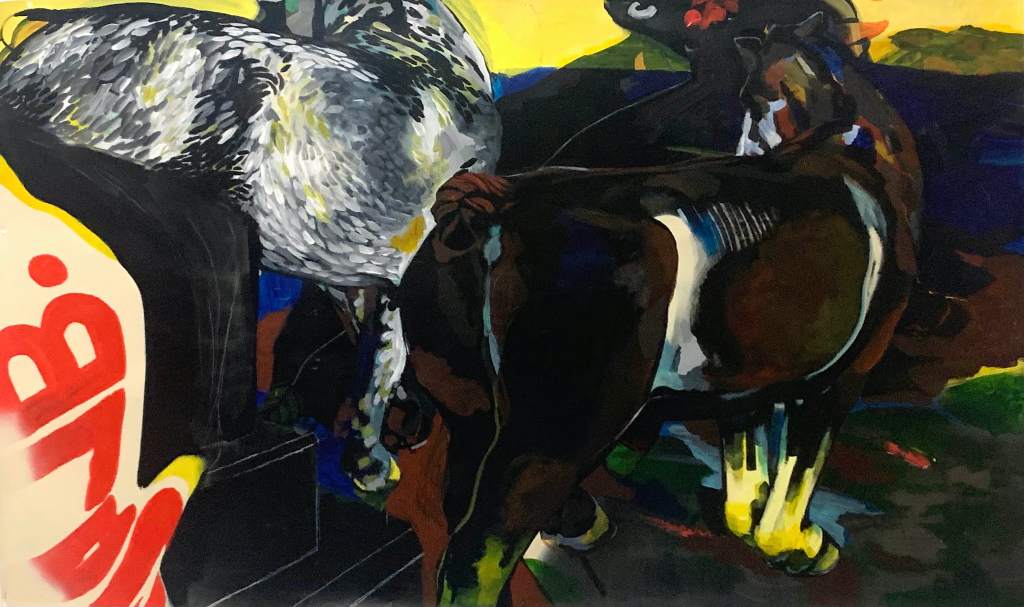
Death Passing Near Water is a solemn piece about transitioning and honoring elders after death. I transitioned alone after the rejection of my identity. Staying true to oneself, connecting to heritage and not leaving everything behind in a moment of loss develops into a contemplation of when the mutual honoring of independent existence will actually happen.
This piece features 3 horses (1 ghost horse) pulling a casket draped with a flag along a shoreline in a funeral procession. The shadowy horse among the two processional ones represents an ecstatic freeing of energy and a celebration of life with its turned back head and random hooves jutting out throughout the piece. The horse closest to the viewer throws up its tail in a tongue in cheek manner exposing its anus. On the draped fabric, obscured letters show the reversed word “BLOCKED” in a nod to current communication culture and the reality of the ended relationship.
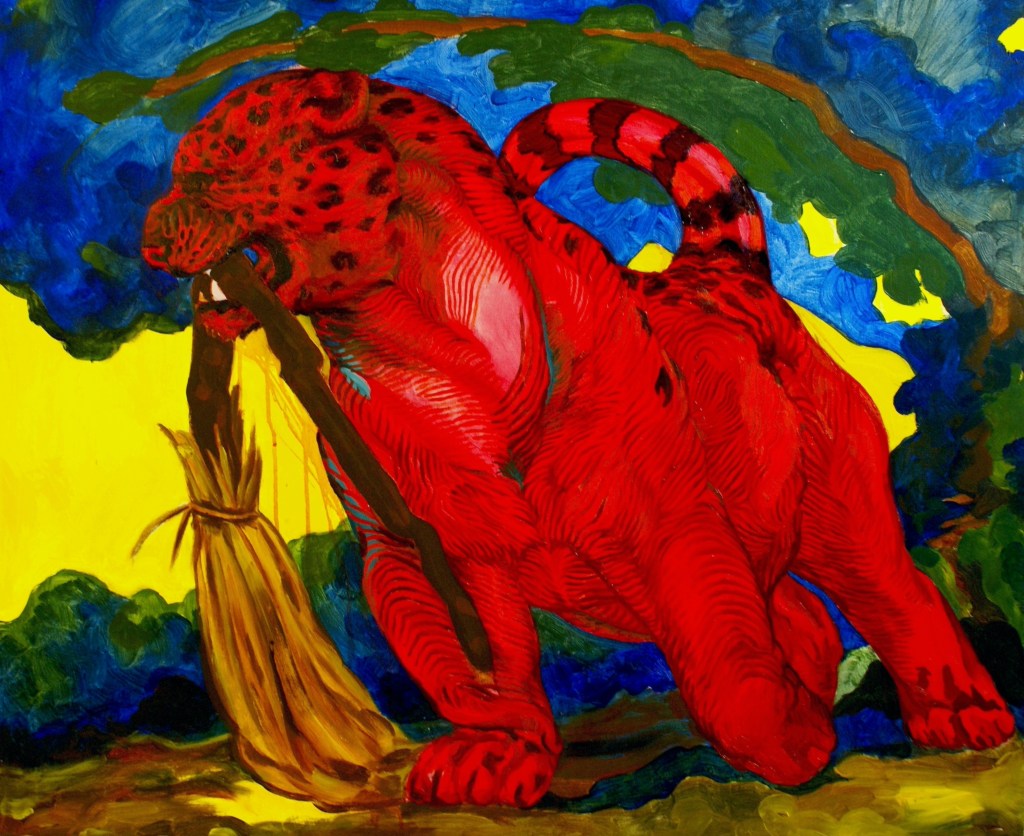
Emily Mae’s Revenge marks the beginning of the Red Cat paintings. Created in 2023, the work grew out of a period of watercolor studies made in between larger paintings that were focused on themes of domestic disturbance and tension.
The painting introduces the Red Cat as a symbol of independence and self-preservation. In this work, the cat reclaims the symbolic role of the painter, Emily Mae Smith, pulling that identity away from cycles of obligation and labor and returning it to a space of instinct, autonomy, and wild feminine reception. Emily Mae’s Revenge frames this act not as escape, but as a necessary reassertion of agency—an embodied refusal of endless duty in favor of self-directed freedom.
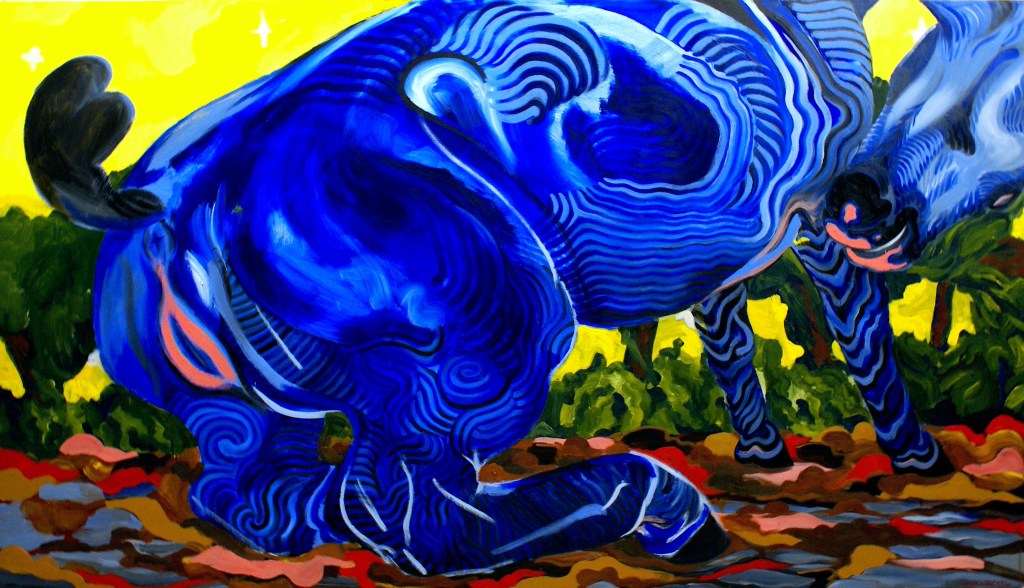
HIPPUS is a focus of using sex organs in plain sight as a deliberate and confrontational shift. This painting addresses the cultural absence, discomfort, and shame surrounding genitalia, while also acknowledging the power and vulnerability that visibility can provoke.
Through a transgender lens, the work functions as an act of radical bodily acceptance. It responds to the way sex and anatomy often become sites of fixation for uncertain or uneasy viewers, using exposure not as spectacle but as insistence. The animals’ bodies refuse concealment, unsettling familiar hierarchies of comfort and forcing encounters with dissonance, projection, and internal contradiction. In doing so, the work seeks to draw allies closer while redirecting discomfort back onto the viewer’s own assumptions.
Animals remain central as symbols of innocence and unrestrained expression. By positioning the body as natural rather than transgressive, the series challenges stigma attached to anatomy and identity alike. The work asserts that visibility is not disrespect, and that bodily autonomy—human or animal—deserves freedom rather than erasure.
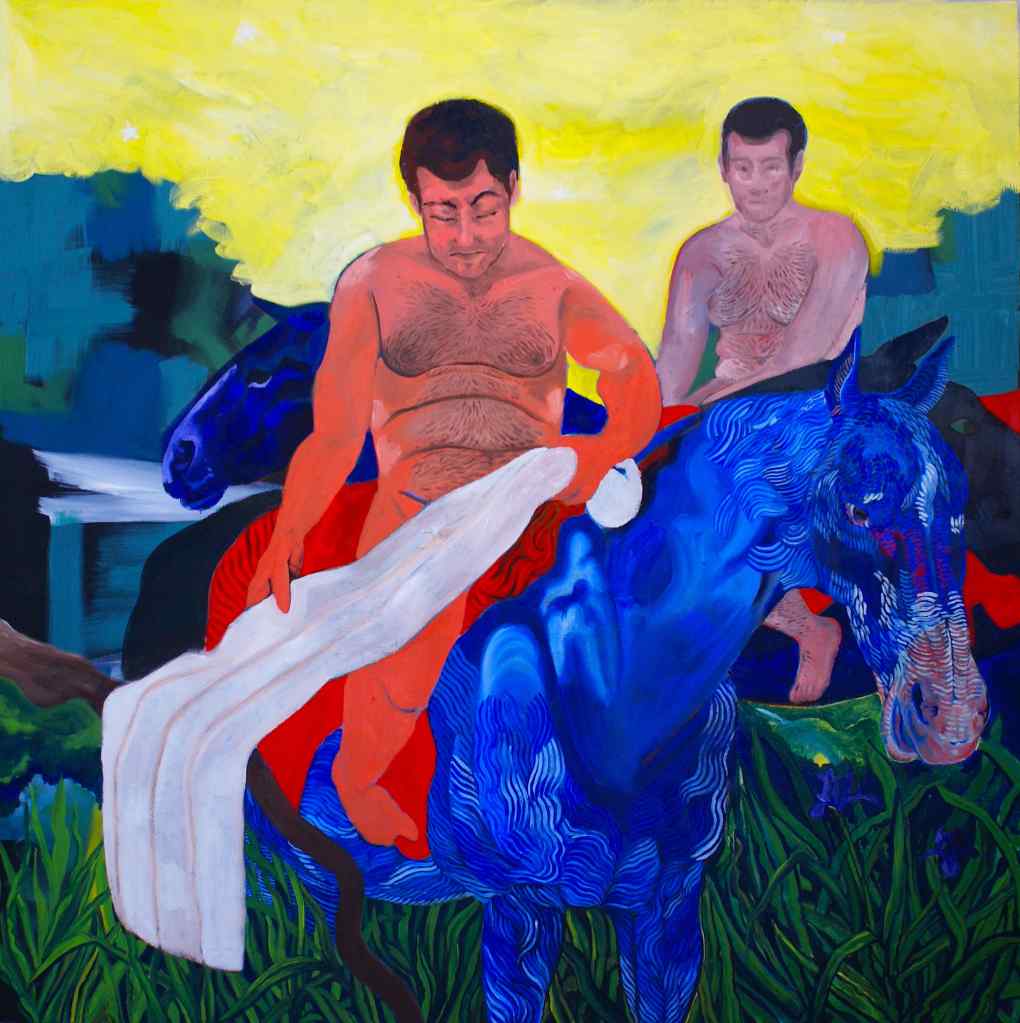
Trans* in America reflects on transitioning in Maryland in 2013, shaped by access to supportive healthcare and legal protections. The experience of being affirmed by state systems fundamentally altered the relationship to government, nationhood, and the idea of civic belonging, which offered a perspective grounded in possibility rather than survival alone.
Trans* in America is a response to Catherine Khamnouane’s Half-Staffed. The painting itself presents a self-portrait reclaiming the white U.S. flag and restoring it with color, using the body as a site of intervention and reimagining. The gesture asks what the nation might look like if trans people could exist safely in positions of visibility and leadership.
Created within a political landscape that allows space for dreaming forward, the work positions legal protection not as an abstract concept but as a catalyst for imagination. Trans* in America asserts that the ability to envision a future is itself shaped by policy, care, and the conditions that make selfhood publicly possible.
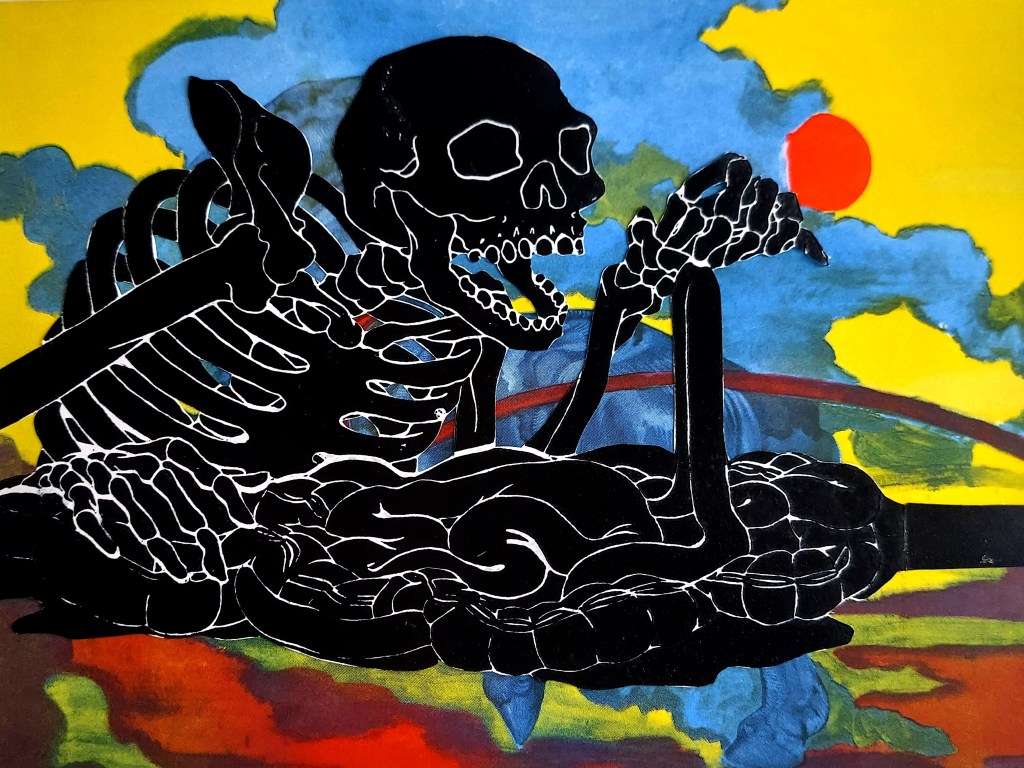
Memento Mori is a collage bringing together two prints, Metamorphosis and Structure + Emotion, uniting philosophical reflection with bodily awareness. The work draws from Plato’s Phaedrus and the chariot allegory, where the pursuit of enlightenment is shaped by internal conflict, imbalance, and the continual effort required to rise while remaining tethered to mortality.
Paired with Structure + Emotion, which examines the collapse of external frameworks and the act of reading emotion through the body, the collage emphasizes the cost of unprocessed feeling. The skeleton and the horse function as parallel figures—each confronting what lies behind the disobedient horse.
Together, the works frame emotional processing as an essential act rather than a delayed one. Memento Mori suggests that attending to the body and its signals early allows for a less burdened passage forward, positioning awareness and reflection as necessary tools for movement, and release.
 JACK NOVOSEL